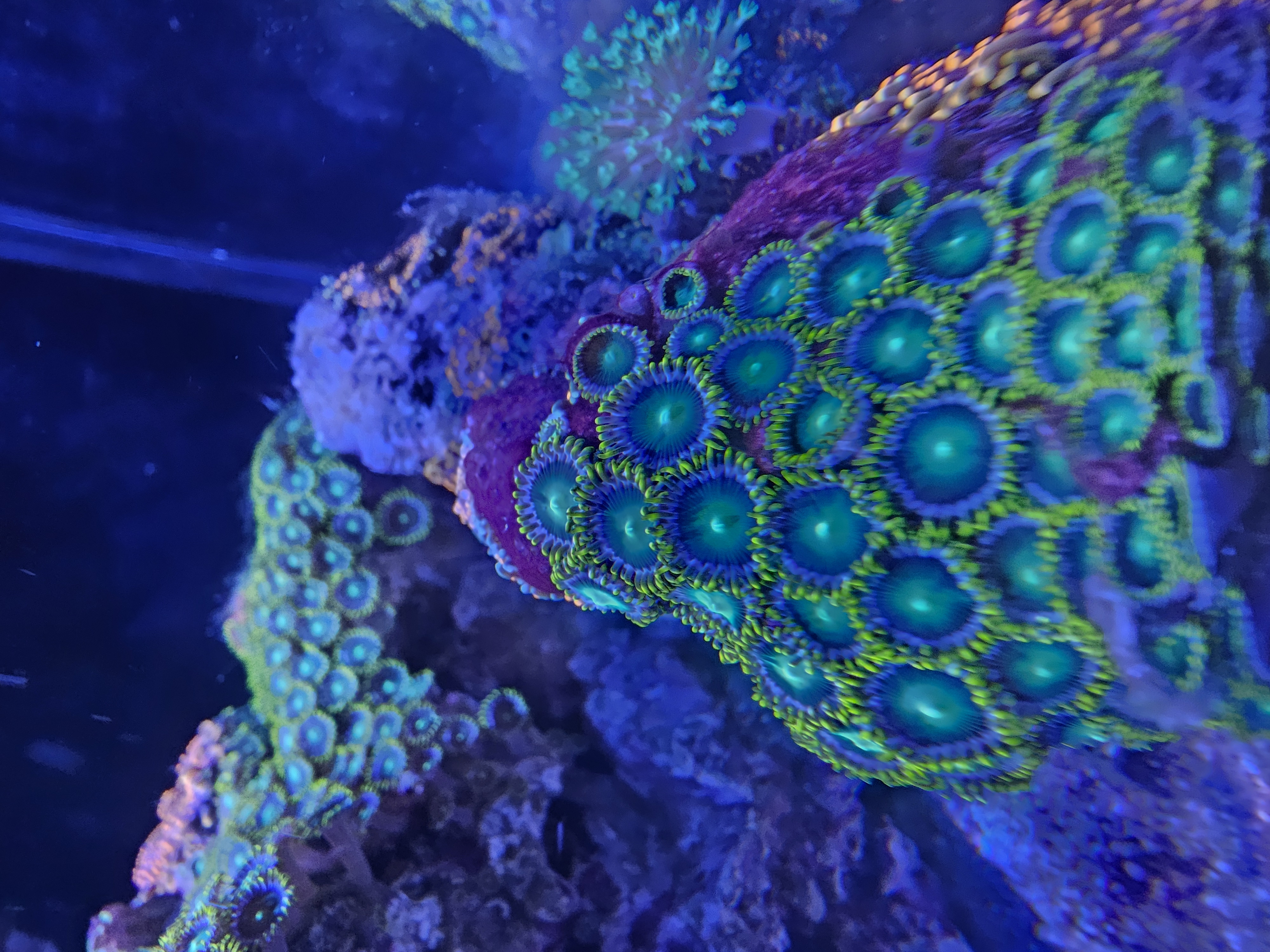
Radioactive Dragon Eye Zoas
Zoanthus sp.
Neon green and yellow center with a dark red skirt - glows intensely under actinic blue lighting. A true rare designer morph.
- Lighting
- Medium
- Flow
- Low
- Placement
- Rockwork
- Temperament
- Peaceful, mildly toxic palytoxin - handle with care
Out of stock — check back soon or join the restock list.
Care guide
Keeping Zoanthus in a reef tank
Zoanthids are colonial polyps that spread across rock by sending out stolons and budding new polyps along them. They are hardy, fast to multiply, and appreciate somewhat more nutrient in the water than SPS would tolerate — a very clean tank often produces slower zoa growth rather than better.
Lighting for Radioactive Dragon Eye Zoas
Moderate light with a heavily blue-weighted spectrum brings out the colour rings that distinguish one named morph from another. Under warmer or dimmer light the same polyps look flat and considerably less impressive. This particular frag is rated for medium light — roughly 100–200 PAR, around the middle of the rockwork.
Water flow
Low to moderate flow. Enough movement to keep detritus from settling among the polyps is right; strong direct current keeps them closed and slows the colony's spread. Flow for this frag should be gentle and indirect.
Placement and tank mates
Rockwork. Peaceful, mildly toxic palytoxin - handle with care.
What to watch for
Handle with gloves and never with broken skin. Many zoanthids carry palytoxin, which is genuinely dangerous, and it should never be handled outside water or scraped dry. Zoa-eating nudibranchs and sudden unexplained melting are the two pest problems that account for most colony losses.